
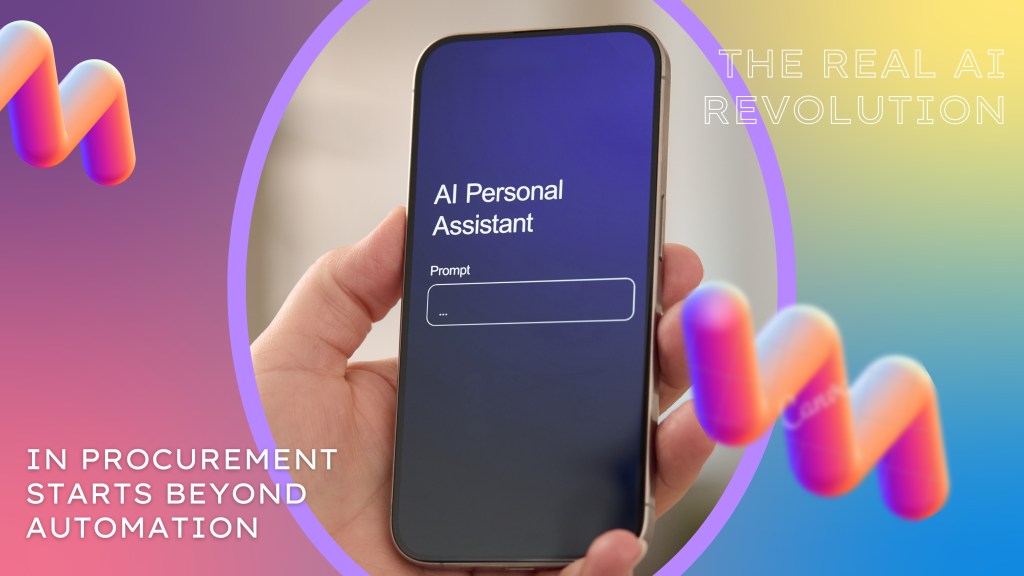
Artificial intelligence is rapidly changing procurement, but the biggest opportunity is not simply automating repetitive tasks. While automation can improve speed, reduce manual effort, and streamline workflows, the true AI revolution in procurement begins when organizations use it to strengthen strategy, improve supplier decisions, and build long-term resilience.
Many procurement teams have already made progress in digital transformation. Processes like procure-to-pay, invoice matching, sourcing, and contract management are becoming faster and more efficient with AI-powered tools. These improvements deliver quick wins and help teams manage growing workloads with limited resources. However, efficiency alone does not redefine procurement’s role in the business. It only improves how existing work gets done.
The next phase of AI in procurement is more strategic. Leaders are now expected to balance cost, risk, resilience, and supplier collaboration in a much more complex environment. Global disruptions, shifting market conditions, and expanding supplier networks have made procurement a critical business function. In this setting, AI can support better decision-making by analyzing supplier data, identifying risk patterns, forecasting disruptions, and modeling different sourcing scenarios.
This is where procurement moves beyond automation. Instead of asking how AI can process transactions faster, organizations should ask how AI can improve category strategy, supplier relationships, and enterprise-wide planning. For example, a sourcing event may not always be the best answer in a constrained market. In some cases, supplier development, dual sourcing, nearshoring, or stronger partnerships may create more value than traditional competitive bidding. AI can provide insights, but people still need to make the final judgment.
That human role remains essential. Procurement strategy involves trade-offs that technology alone cannot resolve. Choosing between lower cost and higher resilience, short-term savings and long-term stability, or flexibility and control requires business context and leadership experience. AI should be seen as an enabler of smarter decisions, not a replacement for procurement professionals.
Another important lesson is that AI cannot fix outdated operating models. If companies simply add new technology to old processes, they may improve output without solving deeper structural problems. Procurement leaders need to rethink workflows, clarify the line between strategic and transactional work, and ensure teams are equipped with both digital skills and commercial judgment.
The future of procurement belongs to organizations that use AI with purpose. Automation is only the starting point. Real transformation happens when procurement leaders redesign how work is done, empower teams to focus on high-value decisions, and use AI to support resilience, agility, and growth.
 ERONDS